-
Conservation and Contagion: Nature Protection, Biodiversity Loss and Infectious Disease
Over the last few decades, the relationship between biodiversity loss and the spillover of zoonotic disease has been subjected to unprecedented scrutiny. From the development of the “cut hunter” theory of HIV/AIDS in the 1990s and 2000s, to the flurry of articles during the COVID-19 pandemic that the destruction of nature is a major driver of infectious diseases, conservation has increasingly been framed as a prophylactic against the emergence of the next pandemic. Recent record temperatures, ecological disasters, ongoing extinctions, deforestation, and accelerating pandemics have brought ever-greater urgency to protecting the environment on health grounds. More than 190 countries have committed to conserving 30% of the earth’s “terrestrial, inland water, and coastal and marine areas” by the year 2030, while calls for the monetization of “biodiversity credits” as a neoliberal conservation finance mechanism akin to “carbon credits” have proliferated.
-
‘The Tsetse Fly as a Vegetarian’? Animal Conservation, Plant Destruction, and Attempts to Understand Trypanosomiasis in South Africa
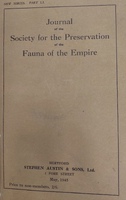
In the 1930s, a suggestion was made in the Journal of the Society for the Preservation of the Fauna of the Empire that the tsetse fly could live entirely on the “latex and juices” of plants. It was hypothesized that non-pathogenic trypanosomes were extracted from succulent Euphorbia plants and transformed within the fly to pathogenic trypanosomes that infected both humans and animals. If this were true, it was argued, it would be a remarkable breakthrough that would save people from killing game and livestock infected with trypanosomiasis – the “scourge” of Africa. By simply eradicating the plants that the tsetse allegedly fed on, they would be able to solve the problem of animal health. Several experiments were conducted to prove the “vegetable theory,” only for them to find that this potential miracle solution to the tsetse problem had no real basis and was quickly discredited. But this particular “vegetable theory” was just one of many that placed plants in the firing line of trypanosomiasis research in the first half of the nineteenth century. The destruction of vegetation became a key priority for tsetse control, and ideas around burning and discriminative clearing to eradicate fly habitats were more often prioritized over game elimination. This reveals something of a contradiction in early conservation initiatives: researchers worked to save animals at the expense of potentially significant plants and plant ecosystems. Even tsetse expert Charles Swynnerton called “bush-areas […] utterly useless,” demonstrating that, despite researchers’ interests in emergent ideas of ecology, plants were clearly seen as less important, let alone anything to be protected. By reorienting our gaze toward plants in histories of colonial tropical medicine and trypanosomiasis research, this paper aims to investigate the following questions: where was African plant conservation in the first half of the nineteenth century, and what exactly were animal conservationists and tropical medicine researchers aware of? Were plants part of an emerging idea of the ‘ecology’ of tsetse control, or simply what stood in the way of a solution to trypanosomiasis? Ultimately, this paper will demonstrate that conservation was an uneven and unequal practice in twentieth-century Africa, particularly in its intersections with tropical medicine. -
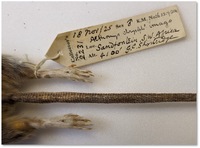
Conservation, Contagion, and Collecting: Guy Shortridge and Nicholas Arends’s Scientific Expeditions to Namibia, 1920s
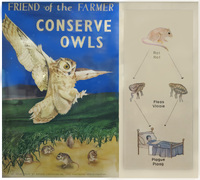
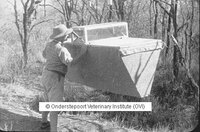
This paper examines a series of scientific expeditions into Namibia led by zoologist and museum curator Guy Shortridge and taxidermist and trapper Nicholas Arends. Over the course of a decade, these two men along with local interlocutors and assistants gathered what was then the largest mammalian collection of any single region in Africa. The goals of their expeditions were threefold. Firstly, to collect a ‘complete’, salvage zoological collection of every mammal in central and northern Namibia, and ‘preserve’ indigenous fauna threatened by the onslaught of white settlers. Secondly, to investigate which areas the government should proclaim as game reserves to protect the remaining wildlife in the region. And thirdly, to gather ecological information on potential rodent reservoirs of the dreaded disease bubonic plague, which was ravaging neighbouring South Africa in the 1920s. In this presentation, by centring the process of travel itself in this story – the logistical and environmental dynamics behind Shortridge and Arends’s expeditions – I will offer an environmental and social history of southern African natural history collecting. In so doing, I will show how collecting was an ecological process that involved both transforming landscapes and negotiating the agency of both the environment and its animal inhabitants. I will also tell the largely forgotten story of how Indigenous Damara, Herero, Kwanyama, and San peoples shaped the collecting that took place in this region, and the scientific knowledge produced within it. -
-